Flag Etiquette
How to display, fold, salute, and retire the American flag — the way generations of veterans have honored her.
Displaying the Flag
When the American flag is flown, displayed, or carried, these long-standing customs ensure she's honored the way generations of veterans have honored her.
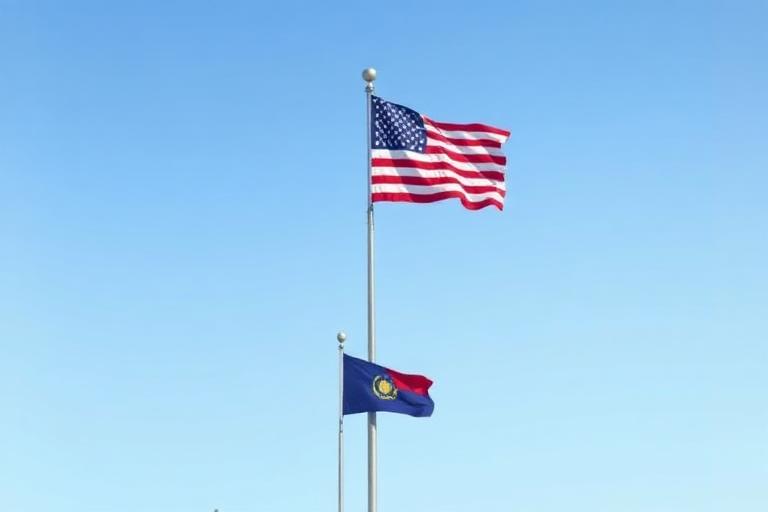
U.S. flag at peak, above any other flag.
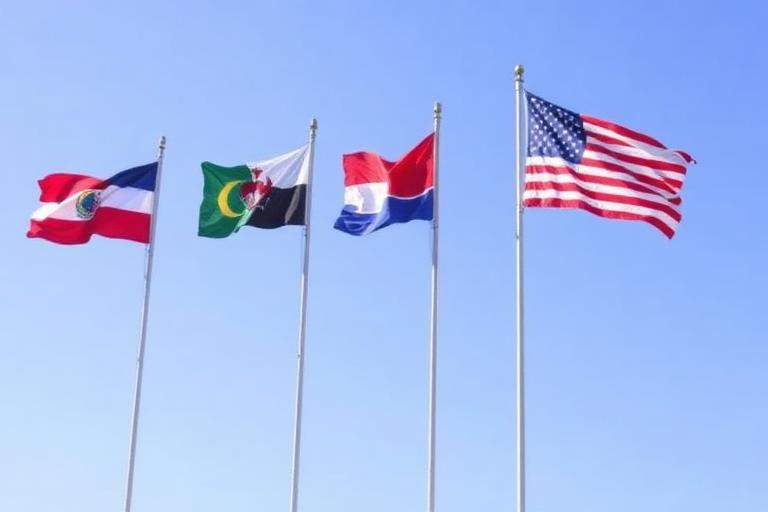
U.S. flag goes to its own right. Flags of other nations are flown at the same height.
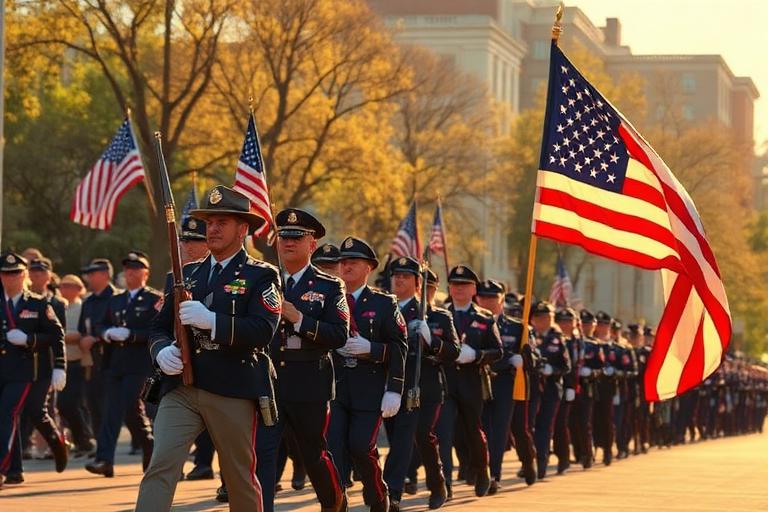
U.S. flag to marchers' right (observer's left).
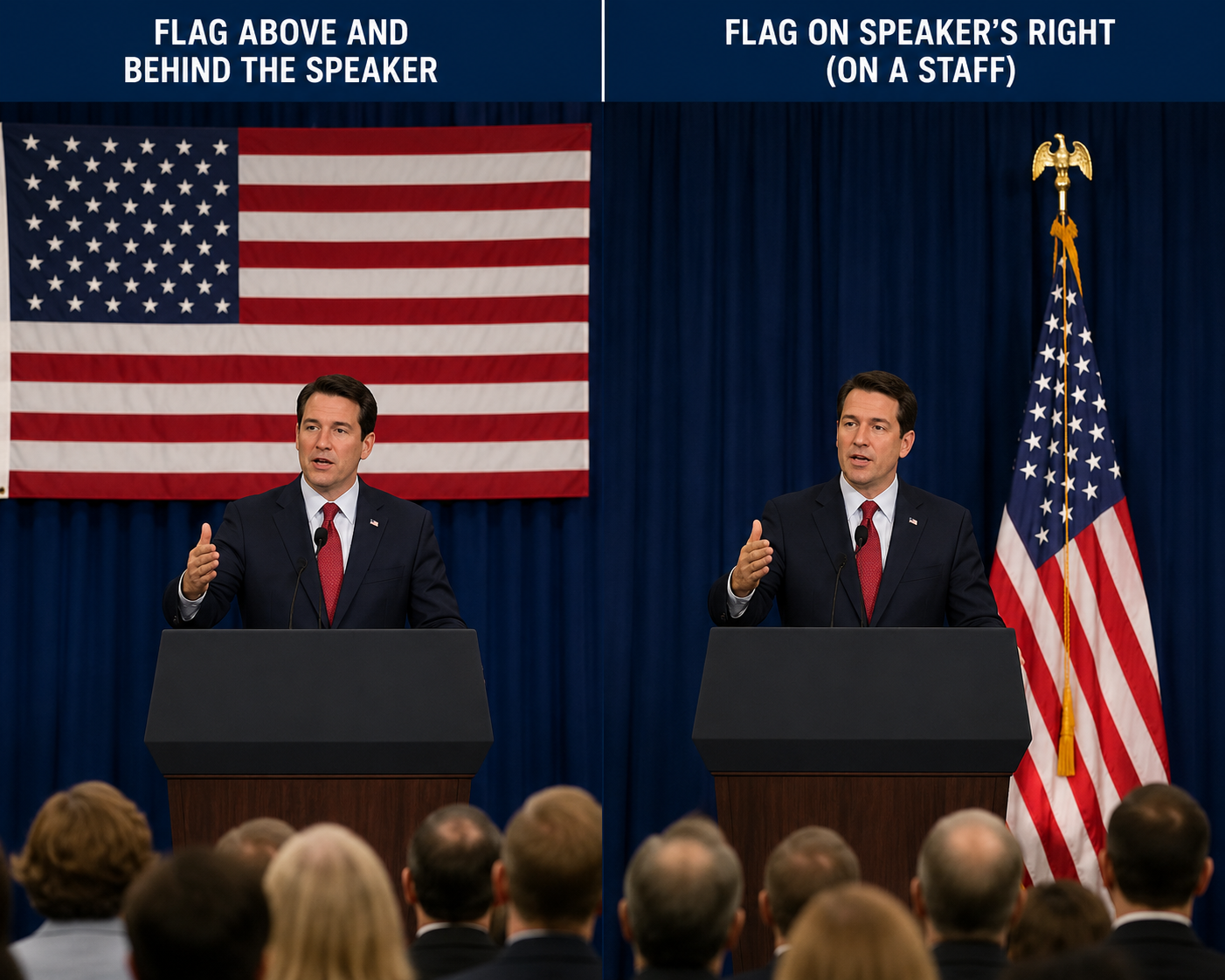
When displayed with a speaker's platform, it must be above and behind the speaker. If mounted on a staff, it is on the speaker's right.
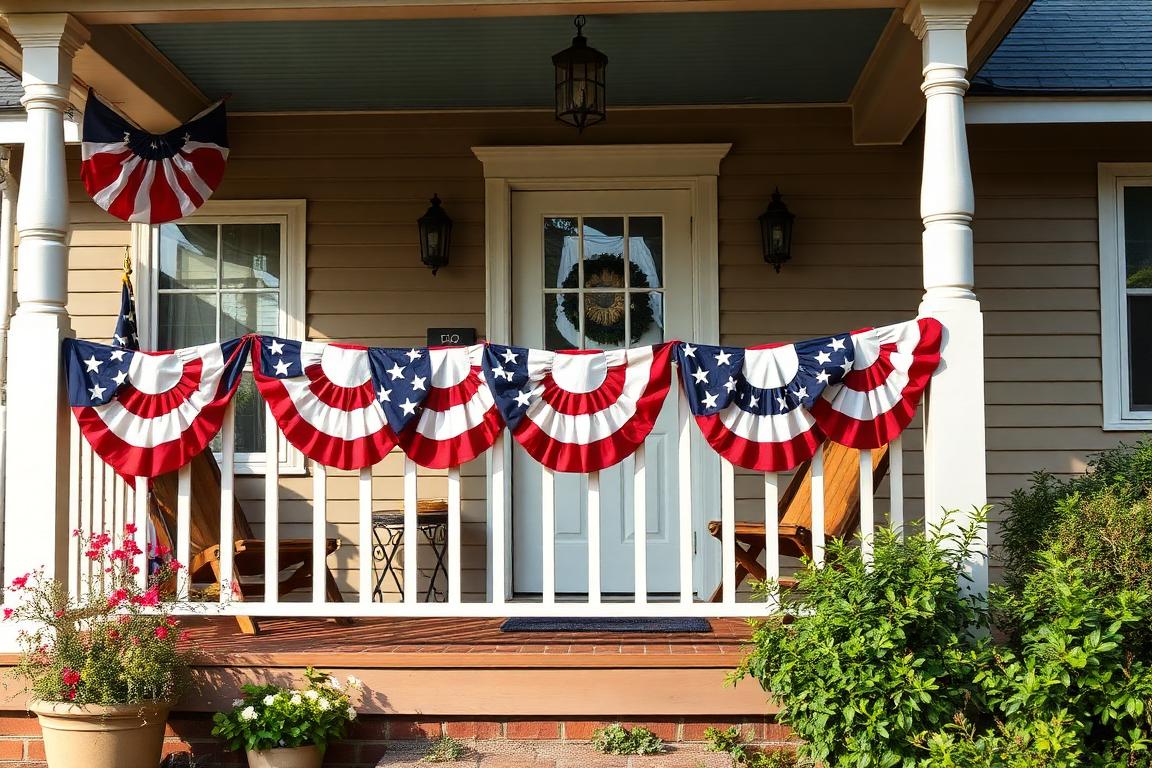
Never use the flag for decoration. Use bunting with the blue on top, then white, then red.
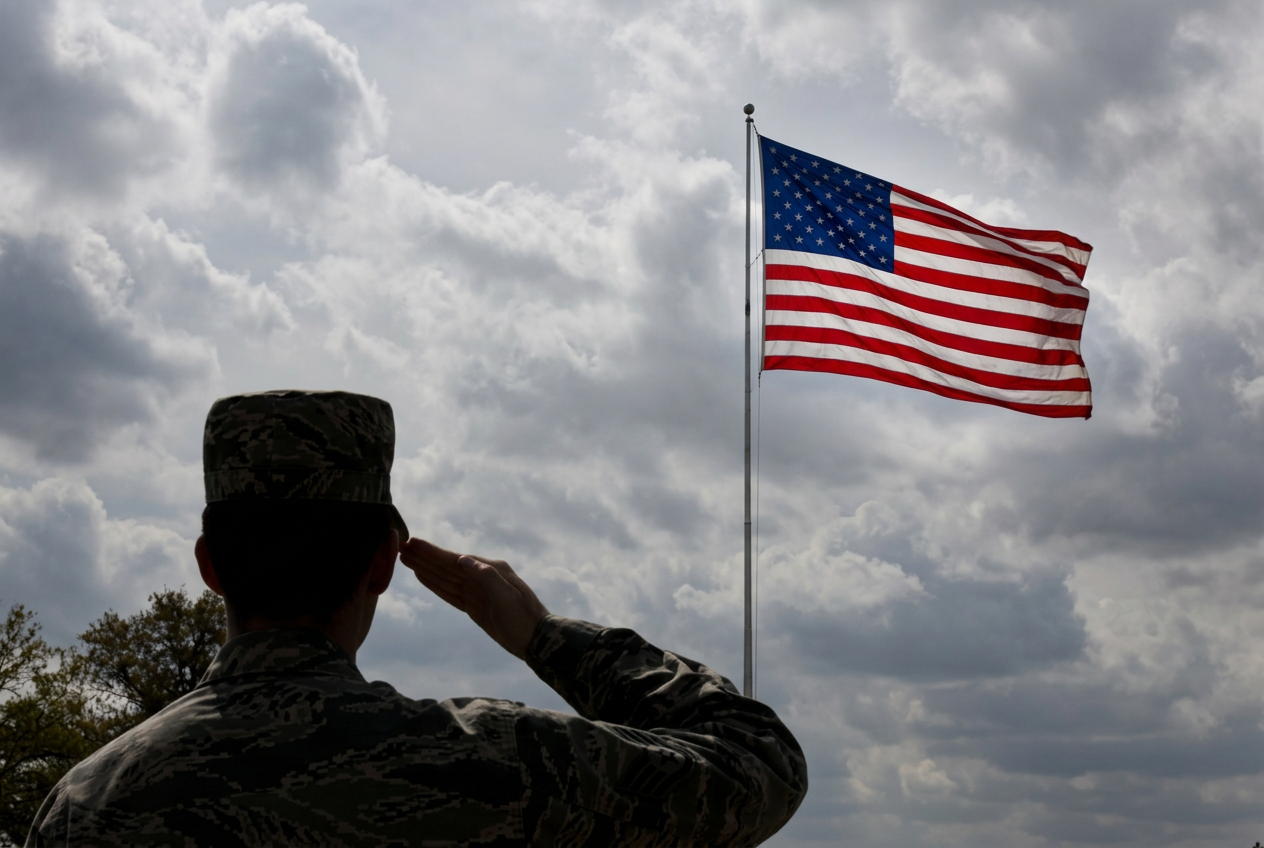
All persons in uniform should render the military salute. Veterans and active-duty members not in uniform may also render the salute. All others should face the flag, stand at attention, and place their right hand over the heart. Headdress, if worn, is held at the left shoulder over the heart.
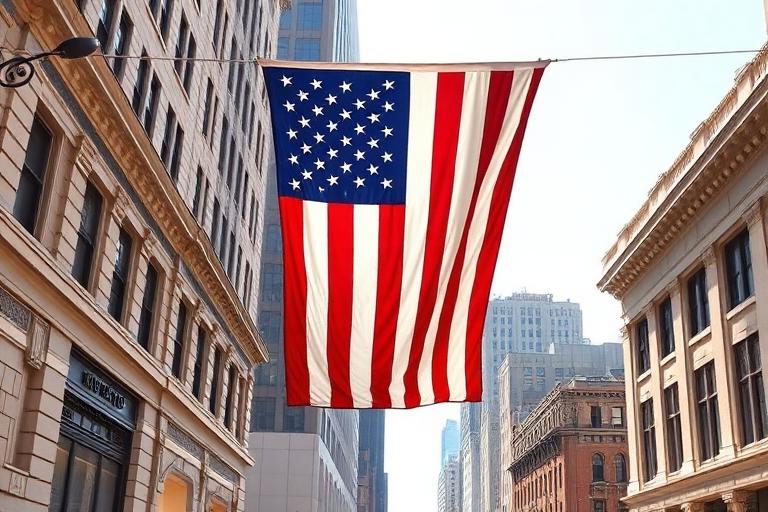
The union (stars) faces north or east depending on the direction of the street.
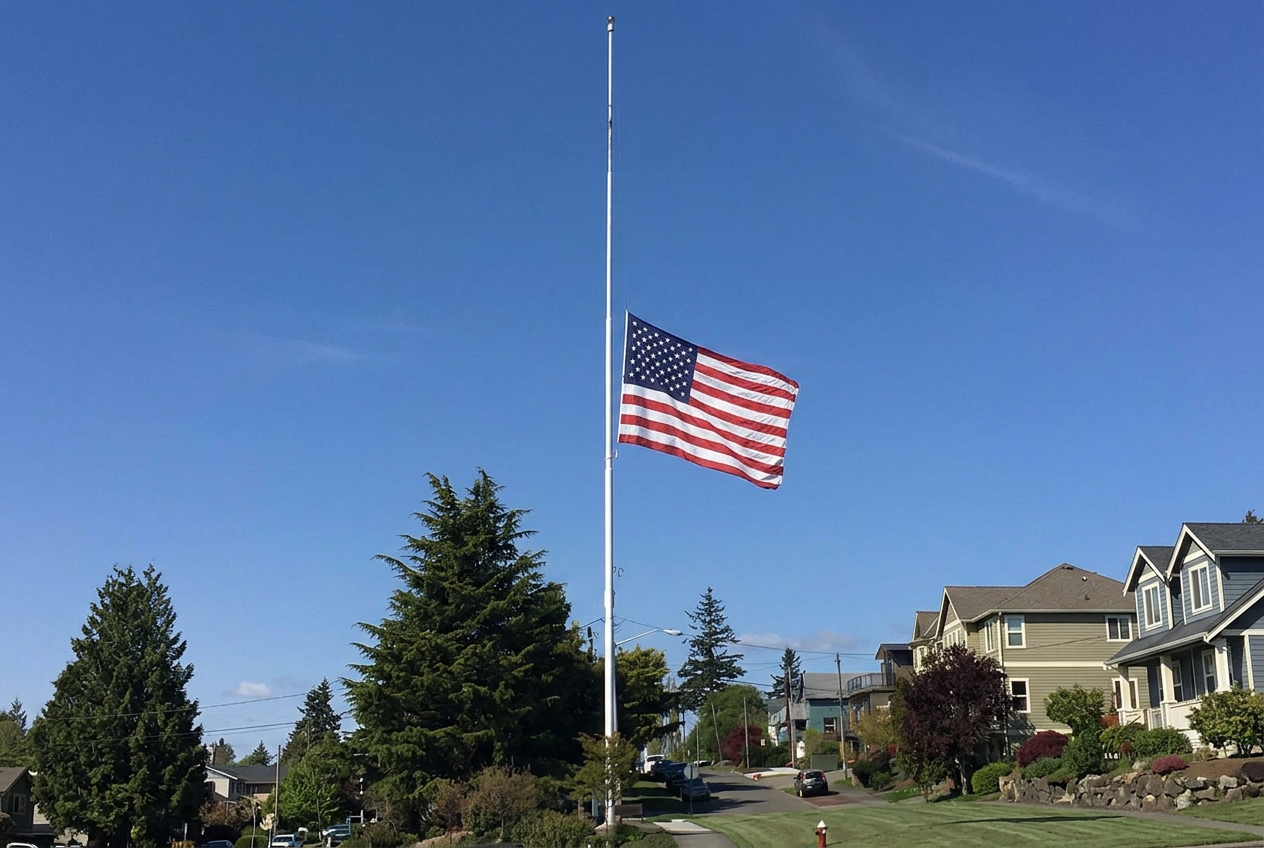
On special days, the flag may be flown at half-staff. On Memorial Day it is flown at half-staff until noon and then raised to full staff.
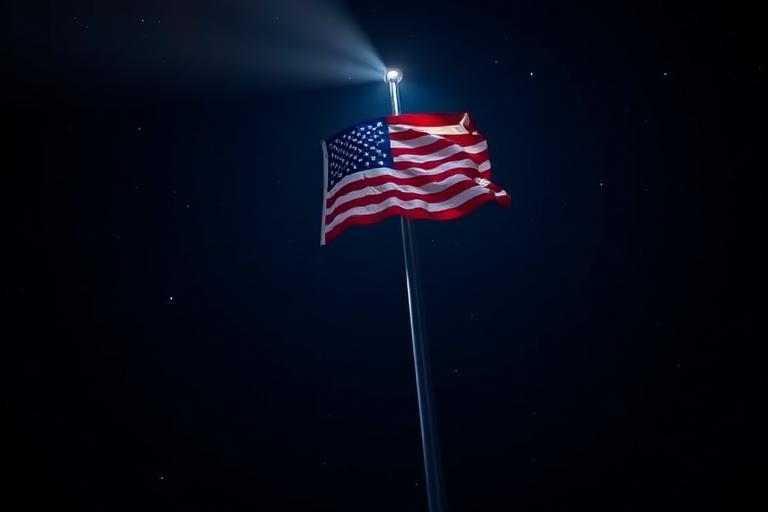
Per the Federal Flag Code, the flag is normally displayed from sunrise to sunset. When a patriotic effect is desired, she may fly twenty-four hours a day if properly illuminated during the hours of darkness.
Special Rules
Simple, non-negotiable. Honor her every time she's in your hands.
- ★Do not let the flag touch the ground.
- ★Do not fly the flag upside down unless there is an emergency.
- ★Do not carry the flag flat, or carry things in it.
- ★Do not use the flag as clothing.
- ★Do not store the flag where it can get dirty.
- ★Do not use it as a cover.
- ★Do not fasten it or tie it back — always allow it to fall free.
- ★Do not draw on, or otherwise mark the flag.
POW / MIA Protocol
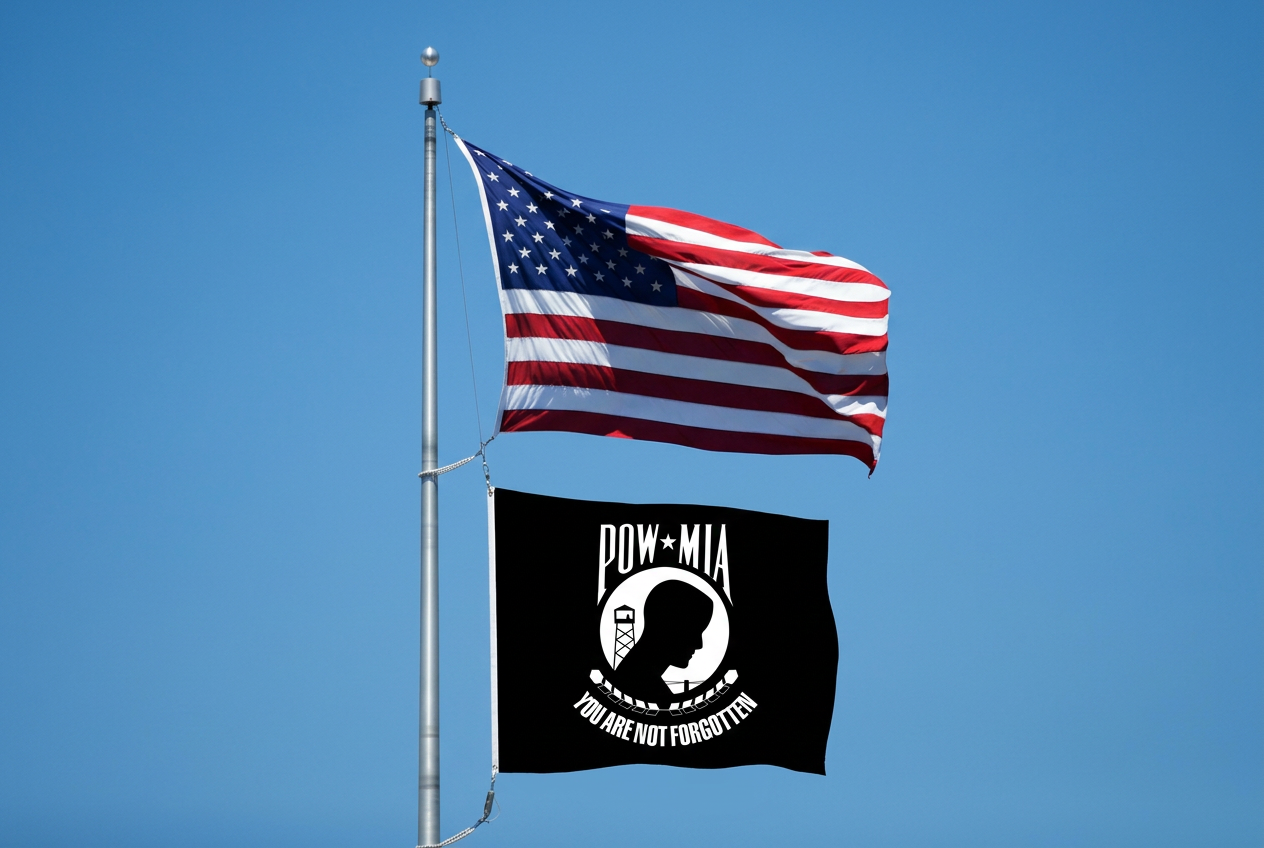
The POW/MIA flag features a silhouette of a POW before a guard tower and barbed wire in white on a black field. "POW/MIA" appears above the silhouette, and "You Are Not Forgotten" appears below. This black and white flag stands as a stark reminder of Americans still prisoner, missing, or unaccounted for, and is accepted nationally and internationally as the symbol of vigilance and remembrance for all POW and MIAs.
All flags flying on the same pole with the U.S. flag are subordinate to her. By VFW protocol — since the POW/MIA flag is considered a federal banner — the POW/MIA flag has precedence over all other flags on the same pole beneath the U.S. flag. In a line of march, the POW/MIA flag is carried to the immediate left of the U.S. flag.
Flag Disposal
When a flag has served her time and is no longer fit to fly, she should be retired with the dignity she's earned.
- ★Fold the flag in the customary triangular manner.
- ★Build a fire large enough and intense enough to ensure complete burning.
- ★Place the flag on the fire.
- ★Come to attention, salute the flag, recite the Pledge of Allegiance, and observe a brief period of silent reflection.
- ★After the flag is completely consumed, safely extinguish the fire and bury the ashes.
- ★Always conform to local and state fire codes or ordinances.
Correct Method of Folding the Flag
Thirteen folds in all. Each one carrying meaning.
Hold the flag waist-high with another person, parallel to the ground.
Fold the lower striped section of the flag over the blue field.
Fold the folded edge over to meet the open edge.
Begin a triangular fold by bringing the striped corner of the folded edge to the open edge.
Turn the outer point inward, parallel with the open edge, to form a second triangle.
Continue triangular folding until the entire length of the flag is folded — with only the blue field visible.
The finished flag resembles a cocked hat — a tribute to the soldiers of the Revolution who fought to win this nation's freedom.
Order of Precedence
The order of precedence when displaying military flags together is: Army, Marine Corps, Navy, Air Force, Space Force, and Coast Guard.
Official U.S. Flag Code
Public Law 94-344, known as the Federal Flag Code, contains the rules for handling and displaying the U.S. flag. While the federal code contains no penalties for misusing the flag, states have their own flag codes and may impose penalties. The language of the federal code makes clear that the flag is a living symbol.
In response to a Supreme Court decision holding that a state law prohibiting flag burning was unconstitutional, Congress enacted the Flag Protection Act in 1989. The Supreme Court later ruled in 1990 that the Act violated First Amendment free-speech protections.
A Brief History of Old Glory
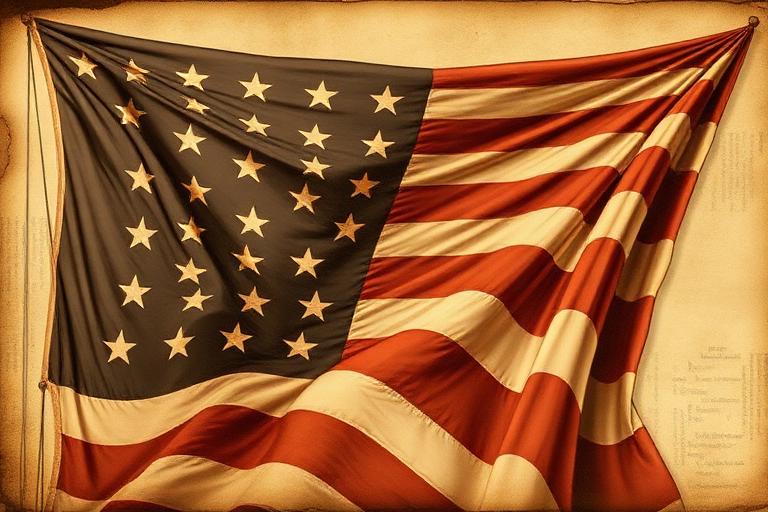
The name "Old Glory" was first applied to the U.S. flag by Capt. William Driver of Salem, Massachusetts. On his 21st birthday in 1824, his mother and a group of Salem girls presented him with a beautiful flag, which he named "Old Glory." It sailed with him for years. After Tennessee seceded in 1861, Driver hid the flag inside a comforter. When Union soldiers entered Nashville in 1862, he carried it to the capitol building and raised it overhead. Old Glory is preserved today at the Smithsonian.
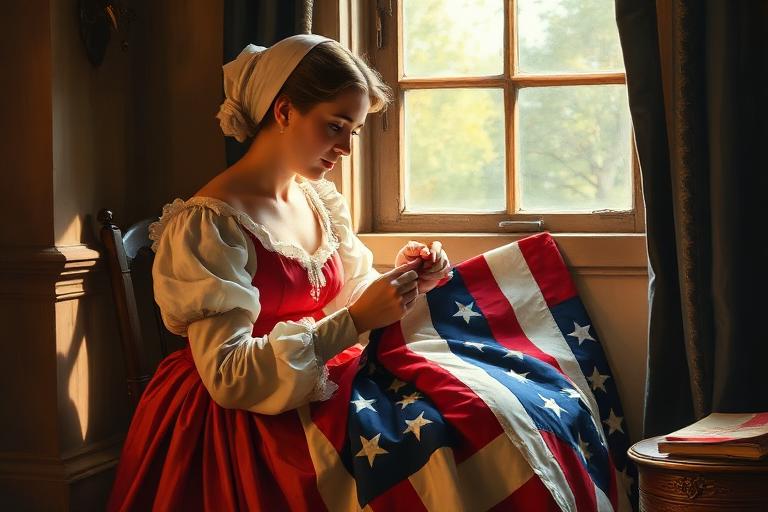
Tradition holds that in 1776 Gen. George Washington, Robert Morris, and Col. George Ross visited Philadelphia seamstress Betsy Ross with a rough design for a stars-and-stripes flag. She agreed to make it and suggested five-pointed stars instead of six. On June 14, 1777, Congress adopted the design as the official U.S. flag.
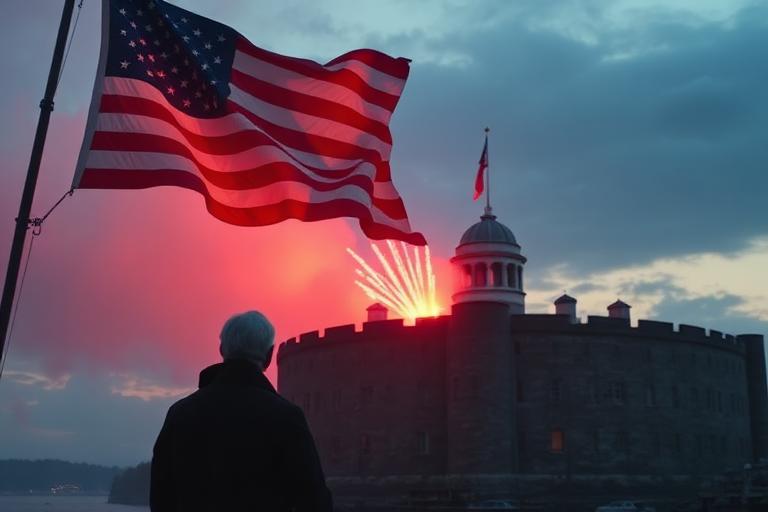
Francis Scott Key wrote "The Star Spangled Banner" in 1814 while watching the bombardment of Fort McHenry. President Woodrow Wilson proclaimed it the national anthem in 1916, and continuous lobbying by the Veterans of Foreign Wars led Congress to officially designate it as the national anthem on March 3, 1931.
Fly Her With Pride
Every flag we build is made to honor the etiquette above — heavy-duty construction, reinforced stitching, and stars and stripes that fly the way she's meant to.